
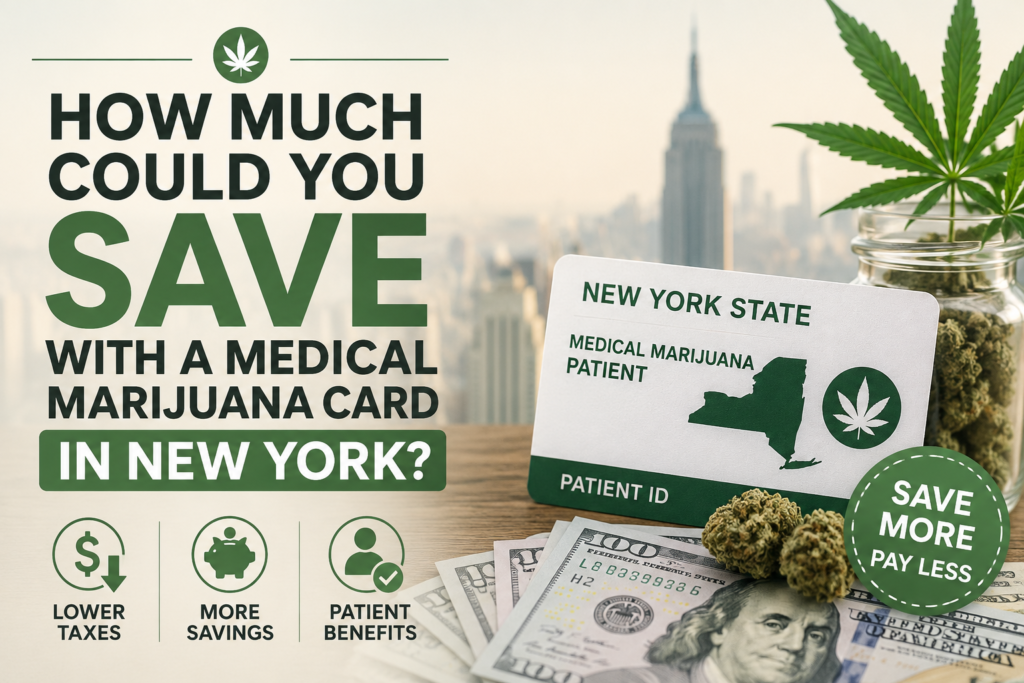
Recreational weed has been legal in New York for many years, and as such, most folks think that a medical marijuana card is unnecessary. But the truth of the matter is, mathematically speaking, the taxes make quite a difference, as a medical patient in New York avoids a substantial portion of what recreational consumers have to pay at checkout. Here is a list of all you saved.
New York No Longer Issues a Physical Card – Here’s What Changed
Before discussing the figures, let’s clarify one misunderstanding at once. Under the law, the Marijuana Regulation and Taxation Act, New York has abolished the actual physical medical marijuana card. What you obtain nowadays is an electronic medical cannabis certification from a duly licensed provider of New York, and the document is automatically registered in the Patient Registry of the Office of Cannabis Management. Starting from 2026, the validity of such certification is two years, and there are no registration fees from the state’s side – the only charge you have to pay is a certification fee from your provider.
How New York Taxes Cannabis: Medical vs. Recreational
That is where the tax savings will be achieved. Adult use transactions of the New York state cannabis are taxed under the New York state cannabis excise tax of 9% and additionally with the local cannabis excise tax that varies between 4% to 0% in addition to the regular sales tax – hence the total taxation level for New York of about 13%, and in the City of New York it is 21%, which considers the additional local cannabis business tax in New York City.
The users of the medical cannabis program in New York are exempted from the state cannabis excise tax and state sales tax (with few exemptions) in accordance with the New York Tax Law § 1115(a)(40). It is explained as follows: on the medical side, while the registered dispensing businesses or the so-called “registered organizations” are obliged to pay the special excise tax of 3.15% of their gross medical sales starting in June 2024, such excise tax cannot be collected as a standalone charge on the invoice or receipt, and therefore it becomes part of the shelf price of the medical product.
What This Actually Looks Like in Dollars
Here’s how the tax gap translates into real annual savings, based on typical monthly spending:
| Monthly Cannabis Spending | Approximate Annual Savings as a Medical Patient |
| $150/month | Roughly $230–$280/year |
| $200/month | Roughly $310–$375/year |
| $300/month | Roughly $470–$560/year |
| $400/month | Roughly $620–$750/year |
The reason behind this is the difference in taxation that takes place when dealing with recreational goods (around 13%, more in NYC) and no taxation for medicinal marijuana purchases. The exact savings depend on where you live within the state because of the different taxes there, and also on the items that you are buying. In general, for an average customer who spends hundreds of dollars per month on purchases, the tax savings alone will easily cover the costs of certification within just a few months.
Beyond the Tax Exemption: Other Financial and Practical Advantages
Higher possession limits
Patients with a valid medical marijuana certification in New York state can buy and keep up to a 60-day supply of the drug, as opposed to regular customers who are limited by the usual limits. This can translate to reduced visits and possibly lower costs per unit through bulk purchasing.
Access to medical-only product lines
Some dispensaries in New York have some products that are specific to the needs of medical patients, such as particular concentrates, large edibles, and tinctures that are not offered in the recreational list, providing better price per milligram to those who are using the drug to address a specific health issue.
Earlier legal access
The earliest time one can obtain medical marijuana certification in New York State is 18 years, unlike the age limit of 21 years for recreational use, which is essential for younger individuals with a valid health condition that qualifies them to use marijuana medicinally.
Employment and housing considerations
Individuals with medical certification will have more legal standing in some employment and housing scenarios than those whose use is just recreational since it is certified as a health need and not recreational.
What Certification Actually Costs
The cost of New York certification for the patient also varies a lot depending on the clinic, ranging from as low as $45 at its lowest end to around $150 or even more. Since there is no separate registration fee in the state of New York, this becomes the entire expenditure on the part of the individual for the two-year period of certification, and thus the aforementioned savings become entirely justified.
How to Get Certified in New York
The procedure is quite straightforward and even possible to do via the internet. It consists only of consulting a licensed medical cannabis provider from New York State that will evaluate the necessity of providing you with a medical cannabis certification. The number of conditions that can qualify one for the medical cannabis certification has increased dramatically within recent years in New York State; thus, it might be better to consult your own situation with the licensed provider rather than to think of yourself as not eligible for it. Once your certification is completed, it is added to the OCM Patient Registry within a single day, and then you are free to buy cannabis at any OCM medical dispensary.
Is It Worth It?
When it comes to a New York State resident who buys marijuana consistently, the numbers become quite simple indeed: The tax exemption pays for itself within a few months, and after that, everything becomes pocket change, apart from being able to carry around more marijuana and utilize products intended for medical use. This particular set of numbers does not look as attractive when applied to a person who is an occasional consumer of marijuana because the amount saved depends on the sum spent.
FAQs
Does New York still issue a physical medical marijuana card?
No. The physical card was done away with by New York under the Marijuana Regulation and Taxation Act. Instead, the patients will get an electronic certificate from a certified provider and will be entered into the Patient Registry of the state, and the certification is valid for two years starting in 2026.
How much tax do medical patients actually save in New York?
The medical patients qualify for exemption from both the state cannabis excise tax and the state sales tax, unlike recreational consumers who have to pay about 13% combined tax. This means that the medical patients pay zero percent tax while the recreational customers pay about 13%.
How much does medical certification cost in New York?
Provider certification fees generally range from around $45 to $150 or more, depending on the clinic. New York charges no separate state registration fee.
Can I buy more cannabis with a medical certification than as a recreational buyer?
Yes. Medical patients in New York can purchase and possess up to a 60-day supply per certification, which is generally higher than standard recreational purchase limits.
At what age can you get a medical marijuana certification in New York?
Medical certification is available starting at age 18, compared to the recreational purchasing age of 21.
Is a medical marijuana card worth it if recreational cannabis is already legal in New York?
Yes – at least for regular buyers, since the tax exemption will usually pay for the certification fee in just a few months, plus additional savings going forward, and greater quantities allowed, plus access to medical-only strains.
Is this article medical, legal, or tax advice?
It is not. It is merely informational text about the cannabis tax system in New York State and its medical marijuana certification program. Consult a doctor or other expert for medical or financial advice on your personal case.